- This new, singularly unique course offers an in-depth exploration of aircraft performance and certification requirements with a focus on Advanced Air Mobility platforms.
- Based on the instructor’s AIAA e-book Operational Aircraft Performance and Flight Test Practices
- Students will receive an AIAA Certificate of Completion upon completion of the course.
OVERVIEW
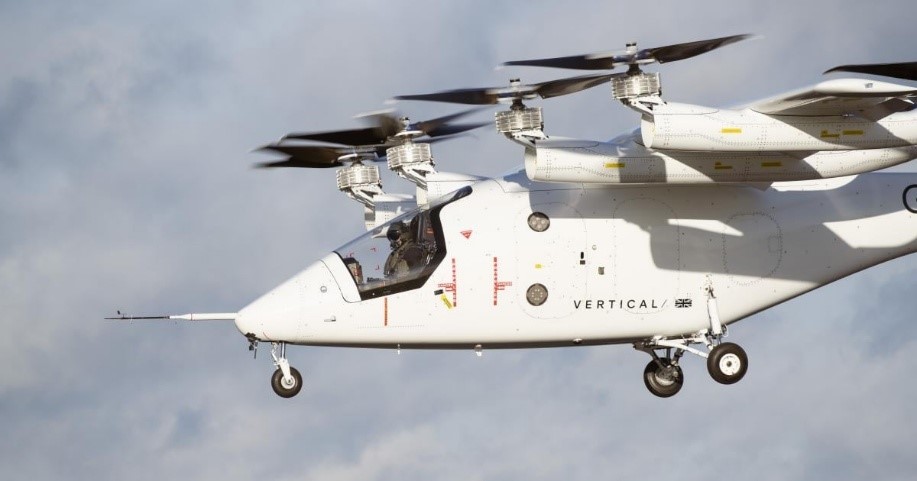
This course offers an in-depth exploration of aircraft performance and certification requirements with a focus on Advanced Air Mobility platforms including platform with thrust vectoring as they transition from thrust-borne flight to wing-borne flight. It begins with a review of performance theory and regulatory standards, then moves into practical elements such as defining flight test plans, selecting instrumentation, and collecting high-fidelity data.
Students will learn how to reduce data variability through engineering collaboration, refine performance models, and ensure alignment with certification metrics. Emphasis is placed on communicating performance results clearly to flight crews and regulatory authorities, and on setting operational limits to maintain safety.
The course concludes with strategies for energy reserves in electric aircraft, giving students a complete understanding of performance evaluation and certification in the emerging AAM industry.
ADVANCED AIR MOBILITY
Advanced Air Mobility (AAM) represents the next evolution in aviation, leveraging electric, hybrid-electric, and autonomous technologies to move people and goods more efficiently, sustainably, and flexibly than traditional air transport. AAM encompasses electric and hybrid aircraft, vertical takeoff and landing (VTOL) systems—including eVTOLs—and both tethered and untethered drones for logistics and public safety.
The AAM ecosystem enables operations beyond conventional airports, introducing new modes of air travel such as:
- Urban Air Mobility (UAM): Short-range passenger flights within cities
- Regional Air Mobility (RAM): Point-to-point trips between nearby towns and cities
- Specialized services: Cargo transport, medical evacuation, and emergency response
Regulatory bodies such as the FAA and EASA are working to define new certification and operational frameworks that address the unique demands of AAM. These include standards for electric propulsion, pilot licensing, automation, low-altitude navigation, flight testing, and the development of infrastructure such as vertiports. These efforts are critical to safely integrating AAM into national airspace systems.
LEARNING OBJECTIVES
- Review the requirements that must be met for certification
- Review basic aircraft performance theory
- Determine what needs to be tested to build performance models
- Determine the required instrumentation to best measure airplane performance
- Understand the scatter normally expected during flight testing and how appropriate feedback from engineering helps the flight crew minimize this scatter
- Develop performance models to match flight test results
- Understand the safety level built-in certification requirements and their impact on airplane performance
- Understand how to show compliance to the certification authorities
- Learn how to present the aircraft performance information to the flight crew
- Understand how to set operational limits to ensure continued operational safety
- Discuss the subject of energy reserves for battery powered aircraft
- [Detailed outline below]
AUDIENCE: This course is designed for aeronautical engineers in the design or flight test departments, educators, aircrews with engineering backgrounds, certification authorities, and military personnel.
COURSE FEES (Sign-In
To Register)
- AIAA
Member Price: $1095 USD
-
Non-Member Price: $1295 USD
-
AIAA Student Member Price: $595 USD
-----------------------------------------------------------------------
The course is divided into 5 major parts, each with two sections.
Part 1 – Air Data- Section 1
- Hour 1: Administration
- Hour 2: Atmospheric Models
- Section 2
- Hour 1: Position Errors
- Hour 2: PE Free Stream Methods
- Section 1
- Hour 1: Hover Performance and HV Envelope
- Hour 2: Stall Speed
- Hour 3: Flight Envelope in Transition Mode
- Section 2
- Hour 1: Drag and Thrust
- Hour 2: Testing for Excess Thrust
Part 3 – Takeoff & initial climb
- Section 1
- Hour 1: Takeoff performance
- Hour 2: Takeoff performance flight testing
- Section 2
- Hour 1: Flight testing for climb performance and data reduction
- Hour 2: WAT limits
- Hour 3: Turning performance
Part 4 – Climb, Cruise, Descent
- Section 1
- Hour 1: Operational Climb Performance
- Hour 2: Cruise Performance and Aircraft range
- Hour 3: Flight test for cruise performance and data reduction
- Section 2
- Hour 1: Flight testing for climb performance and data reduction
- Hour 2: Operational Descent Performance and Gliding Flights
Part 5 – Landing & Energy Reserves
- Section 1
- Hour 1: Landing Performance
- Hour 2: Flight Testing for Landing Performance
- Section 2
- Hour 1: Energy Reserves
- Hour 2: Managing Energy and Pilot Display
Final Q&A and Discussion
INSTRUCTOR

MARIO ASSELIN is currently co-CEO of Asselin, Inc. (www.asselininc.com) and of The AirCraft Company (www.TheAirCraftCompany.org), a company developing the Pangea® family of hybrid-electric regional airliners. Mario is a FAA Flight Analyst DER (Design Engineering Representative) for Part 23 Small Airplanes and Part 25 Transport Category Airplanes. Through Asselin, Inc, Mario has been extensively active in the electric vertical takeoff and landing (eVTOL) community.
Prior to this, he was Director of Engineering, Operations, and Quality at the Bombardier Flight Test Center (BFTC) in Wichita, Kansas. Mr. Asselin also held a position of Engineering Fellow for Bombardier, as well as Senior Manager for Flight Sciences and Flight Test Engineering & Operations at Honda Aircraft Corporation and he was Vice President Engineering at Sino Swearingen Aircraft Corporation. Mr. Asselin's early career included an extensive period in the Canadian Air Force and a short stay at CAE's military division.
Mr. Asselin has taught courses in aircraft performance, stability and control, and aerodynamics for the Royal Military College of Canada in Kingston, Ontario. He has also taught at McGill University, École de Technologie Supérieure (ETS), Concordia University of Montreal, and Kansas University. He holds a Baccalaureate of Engineering degree in mechanical engineering from the Royal Military College of Canada and a Master of Applied Science (M.Sc.A.) in aerothermodynamics (aircraft icing) from École Polytechnique of Montreal.
Classroom Hours / CEUs: 24 classroom hours, 2.4
CEU/PDH
Cancellation Policy: On-demand course purchases are non-refundable.
Contact: Please contact Lisa Le or Customer Service if you have questions about the course or group discounts (for 5+ participants).
|
| Title | Credit(s) | |
|---|---|---|
| 1 | ||
| 2 | ||
| 3 | ||
| 4 | ||
| 5 | ||
| 6 | ||
| 7 | ||
| 8 | ||
| 9 | ||
| 10 |